


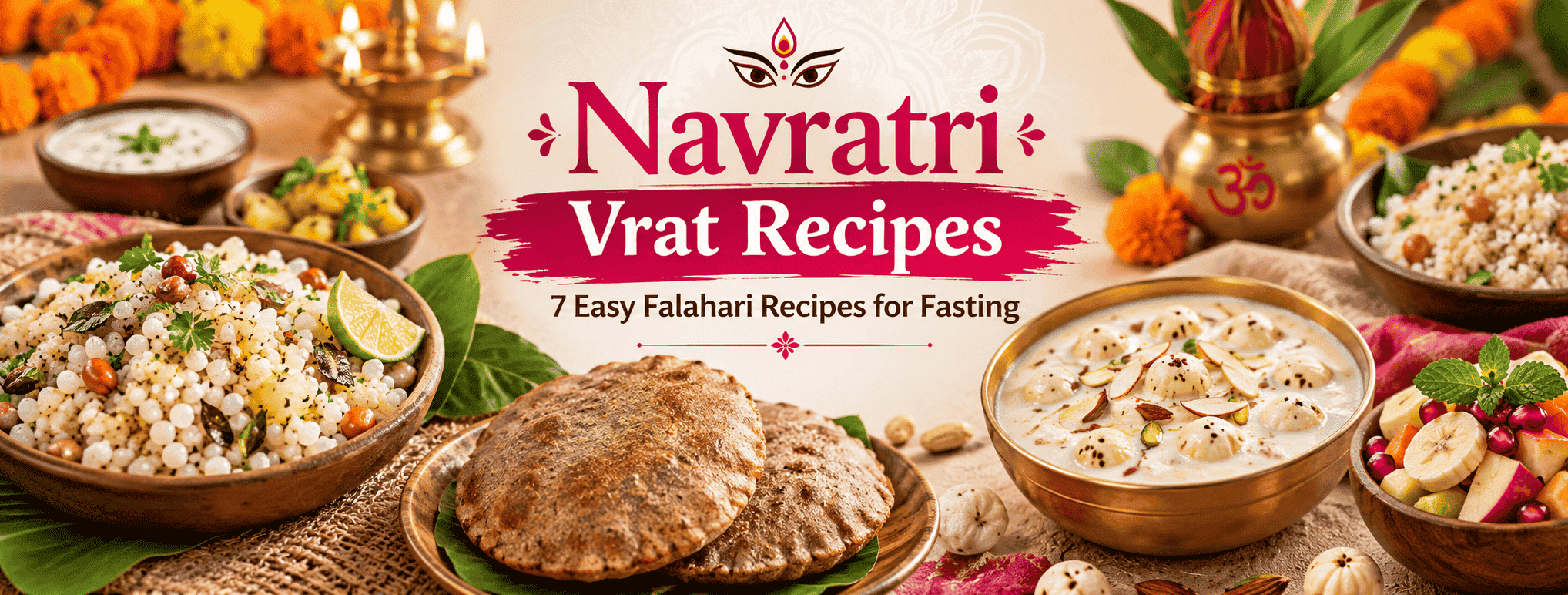
Navratri Vrat Recipes
Festivals
Navratri Vrat Recipes: 7 Easy Falahari Vyanjan for 9 Days of Fasting

Fasting during Navratri doesn't mean eating the same plain dish for nine days. With sabudana, kuttu atta, samak rice, makhana, singhara atta, potatoes and fruit, you can cook a full Navratri vrat ka khana menu that is filling, tasty and simple.
These 7 falahari vyanjan are easy Navratri special recipes for beginners. They are made without onion and garlic and use only common vrat-friendly ingredients, so they suit Sharad Navratri and Chaitra Navratri alike. Each one also works when you are hosting family for aarti and Navratri prasad.
Before you cook: use sendha namak (rock salt) instead of table salt, cook in ghee or groundnut oil, and check labels on packaged flours and spices. Customs differ by family and region, so follow your own tradition for what is allowed.
Navratri Vrat Food List: What to Eat During the Fast
If you are wondering what to eat during Navratri fast, this quick list covers the ingredients most families use. Customs vary by region and family, so follow your own tradition.
Commonly eaten
- Flours: kuttu atta (buckwheat), singhara atta (water chestnut), rajgira atta (amaranth)
- Grains and starches: samak rice (barnyard millet), sabudana (sago)
- Vegetables: potato, sweet potato, pumpkin, lauki, raw banana, arbi
- Dairy: milk, curd, paneer, ghee
- Fruits, makhana, peanuts, dry fruits
- Sendha namak (rock salt)
Commonly avoided
- Wheat, regular rice and most pulses
- Onion and garlic
- Regular table salt
- Non-vegetarian food and alcohol
- Packaged items with non-vrat ingredients, so check labels
1. Sabudana Khichdi Recipe (Navratri Special)

The most popular Navratri breakfast, and quick once the pearls are soaked.
Ingredients
- 1 cup sabudana
- ½ cup roasted peanuts, coarsely crushed
- 1 boiled potato, cubed
- 1–2 green chillies
- 1 tsp jeera
- 1 tbsp ghee
- Sendha namak, lemon juice, fresh coriander
Method
- Rinse the sabudana and soak in just enough water to cover for 4–6 hours, until pearls press easily between your fingers.
- Drain well and mix in the peanuts and sendha namak.
- Heat ghee, crackle jeera, add chillies and potato, and cook for 2 minutes.
- Add the sabudana mix and stir gently on medium-low heat for 5–6 minutes until translucent.
- Finish with lemon juice and coriander.
Tip: Over-soaking makes it sticky. Drain thoroughly and don't add extra water.
2. Kuttu Ki Puri with Vrat Wali Aloo Sabzi

A comforting full meal for lunch or dinner.
Ingredients
Puri:
- 1 cup kuttu atta
- 2 boiled potatoes, mashed
- Sendha namak, water
- Ghee or oil for frying
Sabzi:
- 3 boiled potatoes
- 1 tsp jeera, 1 tsp grated ginger, green chilli
- Sendha namak, pinch of black pepper, a little ghee
Method
- Knead kuttu atta with mashed potato, salt and a little water into a firm dough. The potato keeps the puris from cracking.
- Roll into small puris and fry in hot ghee until puffed and golden.
- For the sabzi, temper jeera, ginger and chilli in ghee. Add crumbled potatoes, salt, pepper and a splash of water. Simmer 3–4 minutes.
3. Samak Rice Pulao (Vrat Ke Chawal Recipe)
Light, fluffy and ready in about 20 minutes. Serve with plain curd for a balanced plate.
Ingredients
- 1 cup samak rice (barnyard millet)
- 1 tsp jeera
- 1 small potato, diced
- 1 tbsp peanuts
- 2 cups water
- 1 tbsp ghee
- Sendha namak, green chilli
Method
- Rinse the rice 2–3 times and soak for 15 minutes.
- Heat ghee, add jeera, chilli, peanuts and potato; sauté 3 minutes.
- Add drained rice, water and salt. Cover and cook on low heat for 10–12 minutes until water is absorbed.
- Rest 5 minutes, then fluff with a fork.
4. Shakarkandi Chaat (Easy Sweet Potato Vrat Snack)
The easiest snack on this list, with no frying and almost no effort.
Ingredients
- 2 sweet potatoes
- 1 tsp lemon juice
- ½ tsp roasted jeera powder
- Sendha namak, pinch of black pepper
- Chopped coriander, pomegranate seeds (optional)
Method
- Boil or roast the sweet potatoes until soft; peel and cube.
- Toss with lemon juice, jeera powder, salt and pepper.
- Top with coriander and pomegranate.
5. Vrat Aloo Tikki with Paneer Stuffing (Navratri Snack)

Crisp outside and soft inside, good as an evening snack or a starter for guests.
Ingredients
- 3 boiled potatoes, mashed
- 2 tbsp singhara atta
- ½ cup crumbled paneer
- Sendha namak, green chilli, coriander
- Ghee for shallow frying
Method
- Mix mashed potato, singhara atta and salt into a smooth dough.
- Mix paneer with chilli and coriander for the filling.
- Flatten a portion of dough, add filling, seal and shape into tikkis.
- Shallow-fry in ghee until golden on both sides. Serve with mint-coriander chutney made without onion or garlic.
6. Makhana Kheer Recipe (Navratri Prasad)

A light, creamy dessert that fits perfectly with vrat rules.
Ingredients
- 1 cup makhana (fox nuts)
- 1 litre full-fat milk
- 3–4 tbsp sugar, adjust to taste
- 1 tsp ghee
- 4–5 chopped almonds
- 2–3 cardamom pods, crushed
Method
- Roast makhana in ghee on low heat until crisp. Crush half coarsely.
- Simmer the milk, add all the makhana and cook 15–20 minutes, stirring now and then.
- Add sugar and cardamom and cook 3–4 more minutes.
- Garnish with almonds. Serve warm or chilled.
7. Singhare Ke Atte Ka Halwa (Vrat Dessert)
A rich, traditional sweet that works well as prasad.
Ingredients
- ½ cup singhara atta
- ½ cup ghee
- 1½ cups warm water or milk
- ½ cup sugar
- Chopped dry fruits, cardamom powder
Method
- Roast singhara atta in ghee on low heat for 8–10 minutes until fragrant and light golden.
- Slowly pour in warm water or milk, stirring constantly to avoid lumps.
- Add sugar and cook until the halwa thickens and leaves the sides of the pan.
- Stir in cardamom and dry fruits.
Healthy Fasting Tips
- Drink enough water, coconut water and buttermilk through the day.
- Avoid long gaps without food. Small, regular portions work better than one heavy meal.
- Balance fried foods with fruit, curd and roasted makhana.
- If you have diabetes or a heart condition, are pregnant, or are elderly, check with your doctor before fasting.
Navratri Gift Ideas and Festive Décor
Navratri is also a season of sharing, and a vrat prasad box or a small gift is a lovely way to include relatives who live far away. Many families exchange small gifts, send prasad boxes to relatives, or decorate the home for the festival. If you'd like to add a personal touch:
Gift hampersSend a thoughtful hamper to family and friends.
Personalized giftsSomething made just for the person celebrating with you.
Festive décorUmbrella and flower garland décor for your entrance.
Same-day deliveryLast-minute gifting in selected cities.
Frequently Asked Questions
What can I eat during Navratri fast? (Navratri vrat food list)
Commonly eaten foods include sabudana, kuttu atta, singhara atta, samak rice, rajgira, potatoes, sweet potatoes, peanuts, makhana, milk products, fruits and sendha namak. Practices vary by family and region.
Can I eat regular salt during Navratri?
Most people use sendha namak (rock salt) instead of table salt during vrat.
What is the easiest falahari recipe for beginners?
Shakarkandi chaat and samak rice pulao need the fewest ingredients and the least time.
Is sabudana healthy for fasting?
Sabudana gives quick energy, but it is mostly starch. Pair it with peanuts, curd or fruit for a more balanced meal.
Which falahari dish can I prepare ahead of time?
You can soak sabudana, boil potatoes and prepare the tikki mix a few hours ahead. Cook everything fresh just before serving.
Which atta is used for Navratri vrat?
Kuttu atta (buckwheat), singhara atta (water chestnut) and rajgira atta (amaranth) are the flours most families use during the fast.
Can I eat paneer and curd during Navratri?
Milk, curd, paneer and ghee are commonly eaten during the fast, though some families follow stricter rules. Follow your own tradition.
Which Navratri recipes can be offered as prasad?
Makhana kheer, singhare ka halwa and sabudana khichdi are popular choices. Prepare them fresh with vrat-safe ingredients and sendha namak where salt is needed.
Can I make these Navratri recipes without onion and garlic?
Yes. Every recipe in this post is made without onion and garlic.
Final Thoughts
These 7 Navratri vrat recipes show that falahari food can be both simple and satisfying. Start with the dishes you're most comfortable making, and rotate through the week so your menu never feels repetitive. Which falahari dish is your family's favourite? Tell us in the comments, and Happy Navratri to you and your family.
